https://prode89.com/the-ultimate-guide-to-mastering-classic-global-sauces-and-condiments/
In the dessert world, English-style cream sauce has a well-known French name called Crème Anglaise. It is a celebrity in the dessert world. It can be a dessert in itself, and it is also an indispensable component in many desserts.
The origin of English custard sauce
English custard sauce has a long history. It originated from the pursuit of gourmet food by the European nobility in the Middle Ages. In the early days, it was simply boiled with eggs, milk and sugar. British chefs later improved it by adding spices such as vanilla and nutmeg, making it deeply integrated with afternoon tea culture and becoming a standard dessert. The Industrial Revolution in the 18th century pushed down the price of sugar, allowing this aristocratic delicacy to enter ordinary families.
Ingredients You’ll Need
- 200 ml milk
- 40g white sugar
- 3 egg yolks
- 1/4 vanilla bean
How to make crème anglaise
- Use a knife to split the vanilla pods, take out the vanilla seeds, and put them into the milk soup pot. Cook until the milk reaches 90°C and then turn off the heat, which means the milk is about to boil.
- Beat egg yolks and sugar with a whisk until the egg yolks turn milky white.
- Slowly pour the hot milk into the egg yolks and stir well.
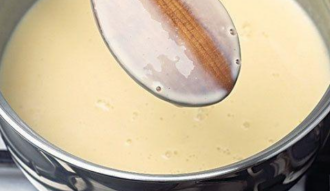
- Pour the egg-milk mixture back into the soup pot, turn on low heat, and stir constantly with a wooden spatula or spoon. When the sauce starts to thicken and a thin film can be hung on the spoon, remove from the heat immediately. Be careful not to heat it too long or at too high a temperature, otherwise the sauce will easily clump or become mushy.
- Pour the prepared custard sauce into a container and cover it with a layer of plastic wrap to prevent a skin from forming on the surface. After it cools down, put it in the refrigerator and it can be kept for 1-2 days.
Recipe Tips from the Chef
For hot cream sauces , rapid cooling is the last step, which is used to stabilize their structure and improve food safety. It is very important to operate quickly and let the mixture quickly drop below 20°C. At this temperature, the structure of the cream sauce will become stable, have a good ability to lock in water, and also avoid bacterial infection and maintain the flavor of the cream sauce.
Serving Suggestions
There are many ways to pair English custard sauce, which can be used to enhance various desserts or even as a dessert in itself. Classic pairings include pudding and ice cream.
Storage Tips
- Store in a sealed glass or plastic container at 4°C in a refrigerator for 2-3 days, or in a vacuum bag for 10 days.
- Never use copper utensils to hold cream sauces as they will develop a patina; use food grade plastic containers or glass containers instead.
Recipe FAQs
What should I do if the custard sauce I made lumps up? : The custard sauce may clump up due to overheating or not stirring in time during the heating process. If the lumps are not serious, you can sieve the lumps of custard sauce and then stir it evenly with a whisk, which may make it smooth again.
https://prode89.com/the-ultimate-guide-to-mastering-classic-global-sauces-and-condiments/